
OBJECTIVES
- To consider green marketing in the context of basic sustainability and sustainable development.
- To define the green marketing strategy.
- To describe key variables of the Marketing Process to enable students to define a working green marketing strategy.
- To address the stages and benefits of the Green Marketing Strategy.
- To give information about green marketing strategies.
CONTENT
Sustainability and Green Marketing
Sustainability
Since the 90s, «sustainability» and «sustainable development» have gained momentum and come to the fore. Environmental, economic and growth targets based on sustainable development by the European Union and the United Nations increase the emphasis on these two concepts. The most prominent of these political initiatives are the United Nations Sustainable Development Goals (SDG) and the European Green Consensus.
Sustainability is expressed as consuming by protecting the limited natural resource awareness and the balance of resources. At this point, attention is drawn to meeting the needs of today and even to be able to leave a legacy from these resources, especially by considering the needs of future generations (Sagir, 2020: 76). The concept of sustainability was developed in the Brutland Commission conducted by the United Nations in 1983 (Singh, 2020). Hasna Vancock (2007) defined the concept of “sustainability as a process that describes the development of all aspects of human life that affects life”.
The concept of sustainability is of great importance for the following reasons (Peattie, 2001: 131):
- It was ensured that issues such as physical environment, economy and society, which were previously considered as separate agendas, were evaluated together in terms of their interdependence and in this context, their interdependence was accepted.
- It has provided new openings in partnerships and collaborations as a common idea on which governments, environmental groups and businesses can agree.
- The environmental problem has gained a global perspective as an indicator of unsustainable production and consumption.
- The concept was widely discussed, adopted as a strategic goal by most governments and large enterprises all over the world.
Today, sustainability is equated with the concept of sustainable development. The World Commission on Environment and Development Report (1987), also referred to as the Brundtland Report, described sustainable development as “meets the needs of the present generation without compromising the ability of future generations to meet their needs” (Sharma vd., 2010:331).
The Brundtland Commission emphasized the need to harmonize both economic and environmental sustainability by using them together. At this point, it has been interpreted as attempts to develop definitions on the way to sustainable development instead of the concept of sustainability directly.
The Rio de Janeiro Earth Summit held in 1992 highlighted the concept of sustainability with its ecological, economic and social aspects (Meakin, 1992).
The process towards the Sustainable Development Goals has been set forth in the UN Global Compact, together with the Paris Agreement (2015), in which climate change has been recognized. This process is considered to be the largest corporate responsibility initiative of the UN Millennium Development Goals, which includes 8 development goals between 2000 and 2015 (Bebbington and Unerman, 2018, p.2-24).
The Sustainable Development Goals (2018), covering a time period between 2015 and 2030, deal with more comprehensive goals compared to the UN Millennium Development Goals (Idowu et al., 2020, p. 6). In order to create a vision for the future with a comprehensive foresight of the next 15 years at the General Assembly of the Nations held in September 2015; A set of critical action plans are encouraged, with 17 SDGs and 169 associated objectives (United Nations, 2015).
Dimensions of Sustainability
In the conceptual framework, it is seen that sustainable development is divided into three parts as environmental, socio-political and economic sustainability (Adams, 2006; Dyllick & Hockerts, 2002).
(a) Economic sustainability: It is a dimension that emphasizes the avoidance of sectoral imbalances that adversely affect agricultural and industrial production and the fact that debts are at a manageable level, based on a system that continuously produces goods and services, regarding the use of scarce resources (Ciegis, 2009: 32-3). ).
(b) Environmental sustainability: It is a dimension that advocates the development of existing environmental values based on the principles of balanced, healthy and resilience of ecosystems where people’s needs are met, and actions that do not reduce biodiversity (Pawłowski, 2008: 83).
(c) Social sustainability: It refers to a system that focuses on social and human needs, supports the adequacy of social services such as education and health, gender equality, social justice and political and social participation (Munier, 2005: 10).
In this context, the main point that poses a danger today is that social sustainability is ignored and economic sustainability is given more priority than environmental sustainability. The impasses of production and consumption models, which use natural resources unlimitedly, without considering the environmental balance, show themselves in different dimensions (Sagir, 2020: 76).
Green Marketing
While sustainable development emerged with its real agenda, such as controlling the world’s resources, it continued its development in the direction of protecting the world’s resources. In this context, green marketing, whose importance has been realized, has taken its place as one of the basic business strategies that ensure sustainable development today (Saxena and Khandelwal, 2010:62).
Other similar terms used with the concept of green marketing in the literature, in terms of reflecting the focus of the event; environmental marketing and ecological marketing, organic marketing, sustainable marketing. Since sustainable marketing means meeting the current needs without compromising the benefits of future generations, the implementation of green marketing appears to be one of the methods of putting it into practice, since it encourages ways to use limited resources rationally by protecting them (Domazet and Kovačević, 2018: 58).
According to Polonsky (1994), green marketing is all activities that involve the provision of shopping and its facilitating design so that the satisfaction of human needs and wants is realized with minimum harmful impact on the natural environment.
The concept of green marketing stems from the understanding of social marketing, based on the necessity of observing the interests of the society in general, rather than just satisfying the customers in particular. “An attempt to qualify a product as environmentally friendly is referred to as green marketing (Kotler, 1999).
Kotler and Armstrong (2009) define green marketing as “marketing in which the needs of consumers and businesses are met while preserving the ability of future generations to meet the needs of future generations on the basis of marketing’s impact on society and the environment.
The first workshop on ecological marketing was organized by the American Marketing Association (AMA) in 1975. 1980 is considered to be the time when green marketing first appeared. The American Marketing Association (AMA) also defines green marketing as the marketing of products deemed to be environmentally safe, which includes a series of activities such as changes in the production process, packaging changes, product modification and advertising (Yazdanifard and Mercy, 2011: 637).
Green Consumer
The green consumer is typically known as the person who favours environmentally friendly attitudes or prefers to buy environmentally friendly products among standard alternatives (FuiYeng and Yazdanifard, 2015: 20). In the field of green marketing, it is expressed as «consumption of products that are environmentally beneficial, conservable, recyclable or sensitive to ecological concerns» as an environmentally friendly purchasing behaviour. Green consumer behaviour is defined as the process of planning, purchasing, consuming and disposing of environmentally safe goods and services to meet human needs and wants (Yalley and Twum, 2021: 65-66).
The idea that consumer behaviour can be affected by environmental concerns has brought the concept of «Green Consumer» to the fore. This situation expresses green consumers more clearly in terms of their tendency to avoid the following products (Peattie: 2001:132).
- To endanger the health of people, especially consumers.
- To cause serious damage to the environment during production, use or disposal.
- Consume large amounts of disproportionate resources.
- Unnecessary waste due to overpackaging.
- The materials used are obtained from endangered species.
- Cruelty to animals.
- And adversely affects other countries that can be counted
Green Marketing Stages
Green marketing consists of four stages, which can be listed as green targeting, developing green strategies, green compliance and green responsibility, respectively. These stages (Alagöz, 2007:4):
Green Targeting: designing green products for environmental consumers is the first step. This stage, in which cars working with alternative fuel technology and products that do not harm the environment, can be cited as examples, is called green targeting. However, at this stage, while green products are designed for green consumers, businesses continue to produce non-green products.
Developing Green Strategies: while the production of green and non-green products is continued, environmental strategies are tried to be developed and environmental policies are determined on the other hand. In this second stage, environmental measures such as increasing energy efficiency and generating less waste in the enterprise are taken.
Environmental Orientation: in the third stage, the production of non-green, non-environmentally friendly products is stopped for the purpose of producing only green products. Therefore, at this stage, consumers’ demands for non-green products do not make much sense.
Considering the Business Socially Responsible: at this stage, being green or green is not enough anymore, it is the stage where the business’s social responsibility sense and green marketing awareness in every sense are developed depending on the business culture and environmental factors.
Reasons for Using Green Marketing
From the perspective of consumers and organizations, there exist numerous reasons for using green marketing strategies. With green marketing, consumers are offered the chance to reach products that are good for their health, do not disturb the environment, and which they are increasingly concerned about. In terms of businesses, it enables them to develop certain product groups, rebrand their products, and improve their ability to use resources rationally and thus reach their goals. Green marketing offers some of the following advantages (Domazet, 2018:61):
• It is seen as an opportunity for businesses to achieve their goals.
Green Marketing Strategies
While applying the green marketing strategy, it is necessary to determine a target group consisting of green consumers first and then develop a marketing mix suitable for the demands and needs of this market. The issue of destroying the product without harming the environment during its production, distribution, and even after consumption has led to the development of marketing strategies in this direction as the main subject of green marketing. In this way, when different advantages are created in these areas, promotion activities are organized to benefit from it (Peattie, 1999: 142). Green marketing mix strategies include developing green-based products, green distribution, green promotion, green pricing and green consumption. These determined general strategies are not limited to the marketing discipline but are also used by other functional areas of the organization with the awareness of sustainability (Polonsky et al., 1997; Willum, 1998).
Green Product
Activities related to sustainable development can be considered both as a potential threat and an opportunity for businesses. Green products can provide an opportunity for businesses to seize an important product opportunity and turn this situation into a strategic weapon. (Polonsky et al. 1997). In this context, green products; are typically non-toxic, made from recycled materials, durable, or minimally packaged. The use of sustainable raw material sources, developing safer or more enjoyable products, pre-consumption, recycling, making more durable products, offering repairable products, developing compostable products and packaging are among the green-based product strategies (Kinoti, 2011:268).
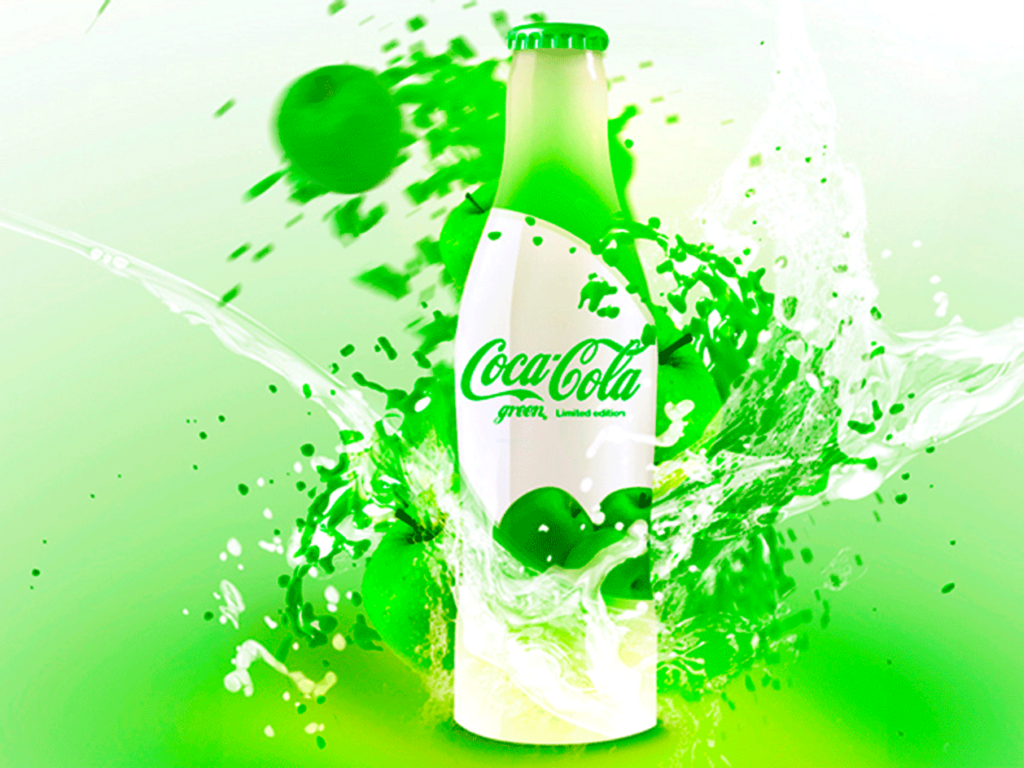
During marketing activities, green products go through sustainable processes. In the green product strategy, the products are produced by considering the demands and needs of the consumer, which is formulated with 4S (satisfaction, sustainability, social acceptability, safety), ensuring sustainability, social acceptance and being reliable (Erbaşlar, 2008). Known as the 4S Formula, these elements are:
• Satisfaction: It refers to the consumer’s desires and needs that have reached the point of saturation.
• Sustainability: Ensuring the continuity of the energy and resources of the product.
• Social Acceptability: refers to the social acceptance of the business or the product it offers, that it does not harm living things or nature.
• Safety: It is the situation that the product does not threaten the health of individuals and gives confidence.
Green Price
With the advantage of cost savings, it is possible to encourage consumers to environmentally friendly products with a lower price offer. Within the scope of demand elasticity for the product, that is, when it comes to price sensitivity, a lower price is a more appropriate strategy for the business. If the price is offered at the same level, the positive features of the product regarding the environment can provide a competitive advantage to the business. If the price of the product is high, promotion activities of the differentiated green product should be emphasized and there should be consumers willing to pay more for the product. The price level, in this case, is important (Emgin and Turk, 2004).
A study by J.Walter Thompson in 1990 revealed that 82% of American consumers are willing to pay up to 5% more for environmentally friendly products. Investment costs for the development of environmentally friendly products indirectly affect the final sales price of the product. For this reason, it is necessary to explain to people that the environment and healthy living also have a cost and that this cost will contribute positively to irreversible vital results in the future by purchasing environmentally friendly products. In case this is realized, the cost of environmental investments will be reflected in the prices at the same rate (Peattie, 2001:131).
Green Distribution
Fewer transport operations mean less environmental damage. For this reason, businesses that work with many intermediaries and have to travel many kilometres in the distribution process from millions of producers to consumers can waive their operational costs and carbon emissions to a certain extent with the optimization of distribution and transportation (Çelik et al., 2016: 281).
In terms of Green Distribution; actions such as environmental awareness, less carbon emission with less fuel, and highlighting partial transportation are of great importance. For this purpose, businesses that prioritize green marketing can either focus on environmental distribution efforts or choose environmentally-friendly distribution channels. Among the developed distribution practices in this context, there is also the reverse logistics activity, which refers to the process of systematically accepting the products or parts sent from the consumer for recycling, remanufacturing or disposal (Dowlatshahi, 2000, pp.143-155).
Green Promotion
It is important that environmental information be provided within the scope of promotional activities and how this information will be provided. In the beginning, if the product has little environmental meaning and the promotion activities carried out based on this, it was evaluated as «green laundering/painting» (fake environmentalism). This superficial tactical greening approach has not been effective in the long run due to consumer reactions.

For this reason, it is important that the information given to the consumer is based on the reality and important environmental changes and that this information is presented in a way that the consumer can perceive correctly (Polonsky and Rosenberg, 2001:26).
Green promotion supports consumers in addressing the greatest environmental hazard, namely the lack of environmental information. Green promotion products, on the other hand, is the situation in which the promotional activity has features that do not harm the natural environment (Polonsky et al., 1997). It should meet one or more of the following criteria (Kinoti, 2011:269):
i) The link between a product or service and the biophysical environment is clearly addressed.
ii) Promote a green lifestyle by emphasizing a product or service
iii) It presents a corporate image of environmental responsibility.
Benefits of Green Marketing
Environmental concerns have caused many businesses to take advantage of opportunities, resulting in various benefits, by using green marketing strategies with both the challenges and opportunities it contains (Kinoti, 2011:270):
i) Profitability: Green-based products create less waste, use less raw materials, and as a result, energy savings can be achieved.
ii) Competitive advantage: The competitive advantage of introducing environmental innovations to the market first.
iii) Increasing market share: Research conducted by Porter Novelli shows that the percentage of Americans who are ready and willing to pay more for some brands, according to survey data, has decreased, thus placing the brand loyalty criterion at an all-time low. The images created by businesses about the environment are seen as an important determinant of purchasing decisions.
iv) Better products: Green based products, energy saving, convenience, performance, safety etc. in terms of quality, it offers higher performances.
Bibliography
Adams, W. M. (2006). The Future of Sustainability: Re-thinking Environment and Development in the Twenty-first Century. The Future of Sustainability. Gland, Switzerland. Htps://oemmndcbldboiebfnladdacbdfmadadm/http://cmsdata.iucn.org/downloads/iucn_future_of_sustanability.pdf.
Alagöz, S.B. (2007). Yeşil Pazarlama ve Eko Etiketleme. Akademik Bakış Uluslararası Hakemli Sosyal Bilimler E-Dergisi Issn:1694 – 528, 11.
Bebbington, J. ve Unerman, J. (2018). Achieving the United Nations Sustainable Development Goals, An enabling role for accounting research, Accounting, Auditing & Accountability Journal, 31(1), 2-24. Doi 10.1108/AAAJ-05-2017-2929, 2-24.
Choudhary, A. and Gokarn, S. (2013). “Green Marketing: A means for sustainable development”, International Refereed Research Journal, IV, 3(3), 26-32.
Domazet, I. and Kovačević, M., 2018. The role of green marketing in achieving sustainable development.
Ciegis, R., Ramanauskiene, J., & Martinkus, B. (2009). The Concept of Sustainable Development and its use for Sustainability Scenarios. Inzinerine Ekonomika-Engineering Economics(2), 28-37.
Çelik, İ. E., Akman, Ö., Ceyhan, A. & Akman, V. (2016). ‘Yeşil Pazarlamada Sürdürülebilirlik ve Dünya’da Bir Örnek: Tchibo’, International Conference on Eurosian Economics, s. 278-282.
Dowlatshahi, S., 2000. “Developing A Theory of Reverse Logistics”. Interfaces, Vol.30 Issue 3, pp.143-155., doi:10.1287/inte.30.3.143.11670, https://www.researchgate.net/publication/245907163_Developing_a_Theory_ of_Reverse_Logistics, Erişim Tarihi: 08.01.2018.
Dyllick, T., & Hockerts, K. (2002). Beyond the business case for corporate sustainability. Business Strategy and the Environment, 11(2), 130–141. http://doi.org/10.1002/bse.323.
Emgin, O. and Turk, Z. (2004). “Yesil Pazarlama” Mevzuat Dergisi, (7), 78.
Erbaşlar, 2008. “Yeşil pazarlama”, Paradoks Ekonomi, Sosyoloji ve Politika Dergisi, 1, p.1-12.
Hasna, A. M. (2007). Dimensions of sustainability. Journal of Engineering for Sustainable Development: Energy, Environment, and Health 2 (1): 47–57.
Kinoti, M. W. (2011). Green marketing intervention strategies and sustainable development: A conceptual paper. International Journal of Business and Social Science, 2, 263– 273.
Kotler, P (1999). Marketing Management: The Millennium Edition, New Delhi: Prentice-Hall of India.
Kotler, P. and Armstrong, G. (2009), Principles of Marketing, 13th ed., Pearson, Englewood Cliffs, NJ.
Meakin, S. (1992). “The Rio earth summit: Summary of the United Nations conference on environment and development”, Erişim adresi http://publications.gc.ca/Collection-R/LoPBdP/BP/bp317-e.htm.
Munier, N. (2005). Introduction to Sustainability: Road to A Better Future. Dordrecht: Springer, s. 1.
Pawłowski, A., (2008), How Many Dimensions Does Sustainable Development Have?, Sustainable Development, 16(2), Wiley & Sons, s. 81-90.
Peattie, K. (1999). “Trappings Versus Substance In The Greening of Marketing Planning”.
Journal of Strategic Marketing, 7, pp.131-148.
Peattie, K. (2001). Towards Sustainability: The Third Age of Green Marketing. The Marketing Review 2(2):129-146.
Polonsky M. J.; “An introduction to Green marketing” Electronic Green Journal, vol.1, Issue 2, Nov, 1994.
Polonsky, M. and Mintu, A. (1997). “The future of Environmental marketing: Food for Thought” Environmental marketing strategies, practice, theory and research Haworth pp. 389-391.
Polonsky, M.J. and Rosenberg P.J. (2001). “Reevaluating Green Marketing: A Strategic
Approach”. Business Horizons, 44/ 5, pp.21-30.
Sağır, H. (2020). Çevresel Sürdürülebilirlik Bağlamında Konya Kapalı Havzası Üzerine Bir Değerlendirme. Çağdaş Yerel Yönetimler Dergisi 29(4), ss.73-118.
Saxena, R., Khandelwal, P.K., 2010. Sustainable development through green marketing: the industry perspective. The International Journal of Environmental, Cultural, Economic and Social Sustainability. 6 (6), 59-79.
Singh, S. (2020, 16 Ağustos). Sustainable marketing practices for sustainable development, Erişim adresi https://timesofindia.indiatimes.com/readersblog/marketing-swan/sustainable-marketing-practices-for-sustainable-development-24638/.
Sharma, A., Iyer, G. R., Mehrotra, A., & Krishnan, R. (2010). Sustainability and business-to-business marketing: A framework and implications. Industrial Marketing Management, 39(2), 330–341.
United Nations, (2015). United Nations: Sustainable Development GOAL: UN Climate Change Conference Paris 2015 Paper, Erişim adresi https://www.un.org/sustainabledevelopment/cop21/.
Willums J. O, the sustainable business challenge, A briefing for tomorrows business leaders, Greenleaf publishing, 1998 pg. 137-158, 191.
Yalley, A. A. and Twum, K. K. (2021). Green Consumer Behaviour. C. Mukonza et al. (eds.), Green Marketing in Emerging Markets, Palgrave Studies of Marketing in Emerging Economies, https://doi.org/10.1007/978-3-030-74065-8_4.
Yazdanifard, R. , Mercy, I. E. (2011). The impact of Green Marketing on Customer satisfaction and Environmental safety. International Conference on Computer Communication and Management Proc .of CSIT vol.5 IACSIT Press, Singapore.
 Spanish
 English
 French
 Portuguese
 Turkish